Mold grows fast. You see a small patch on your bathroom wall today, and next week you find three more spots behind the shower curtain. Through microscopic spores that travel through the air, mold spreads to damp surfaces where colonies multiply. Left unchecked, this fungus damages your home and affects your health.
Some mold situations go beyond what a spray bottle and scrub brush can handle. This guide gives you practical mold cleaning tips to tackle small infestations before they become major problems. You’ll learn what works, what doesn’t, and when to call a restoration company. Let’s start with what you can do on your own.
How Mold Grows in Your Home
Three things feed mold: moisture, organic material, and the right temperature. Your home provides all three. Bathrooms, basements, attics, and kitchens are prime spots because water accumulates there.
Different species grow in different places. Black mold (Stachybotrys chartarum) prefers wet drywall and ceiling tiles. On food and damp wood, green mold often appears. White mold shows up on plants and concrete. Within 24 to 48 hours of water exposure, mold growth begins on damp surfaces.
Signs You Have a Mold Problem
The obvious indicator is visible mold on walls, ceilings, or floors. But hiding is what this fungus does well. Look for these warning signs:
Musty, earthy smells that persist even when you can’t see growth
Water stains on walls or ceilings that signal moisture problems
Peeling wallpaper, warped floors, and condensation on windows
Health symptoms like sneezing, coughing, itchy eyes, and skin rashes that worsen at home
Worsening asthma or allergy symptoms when multiple family members feel sick indoors
Check behind appliances, under sinks, inside air ducts, and in crawl spaces. Your nose helps you find hidden infestations when your eyes miss them.
What Kills 100% of Mold?
No single product kills 100% of mold in every situation. Different solutions work better on different surfaces and species. The most effective way to clean mold combines physical removal with chemical treatment.
Best Cleaning Solutions for Mold Treatment
Effective options for mold removal:
Bleach solution (1 cup bleach per gallon of water) kills surface mold on non-porous materials like tile, glass, and metal. Spray, let sit 15 minutes, scrub, and rinse. Doesn’t penetrate porous materials, so roots survive and regrow.
White vinegar (undiluted) works on both mold and porous surfaces. Spray, wait one hour, scrub, and wipe clean. According to research cited by HGTV, vinegar kills about 82% of species.
Hydrogen peroxide (3% solution) eliminates growth on most surfaces. Spray directly, wait 10 minutes, scrub, and wipe. Has antifungal and antibacterial properties.
Baking soda (quarter tablespoon per spray bottle of water) is safe and mild. Spray, scrub, rinse, and spray again. Let it dry to prevent future growth.
Borax (1 cup per gallon of hot water) works naturally. Apply with a brush, scrub, wipe excess, but don’t rinse. The residue blocks return growth.
Safety First: What You Need Before You Start
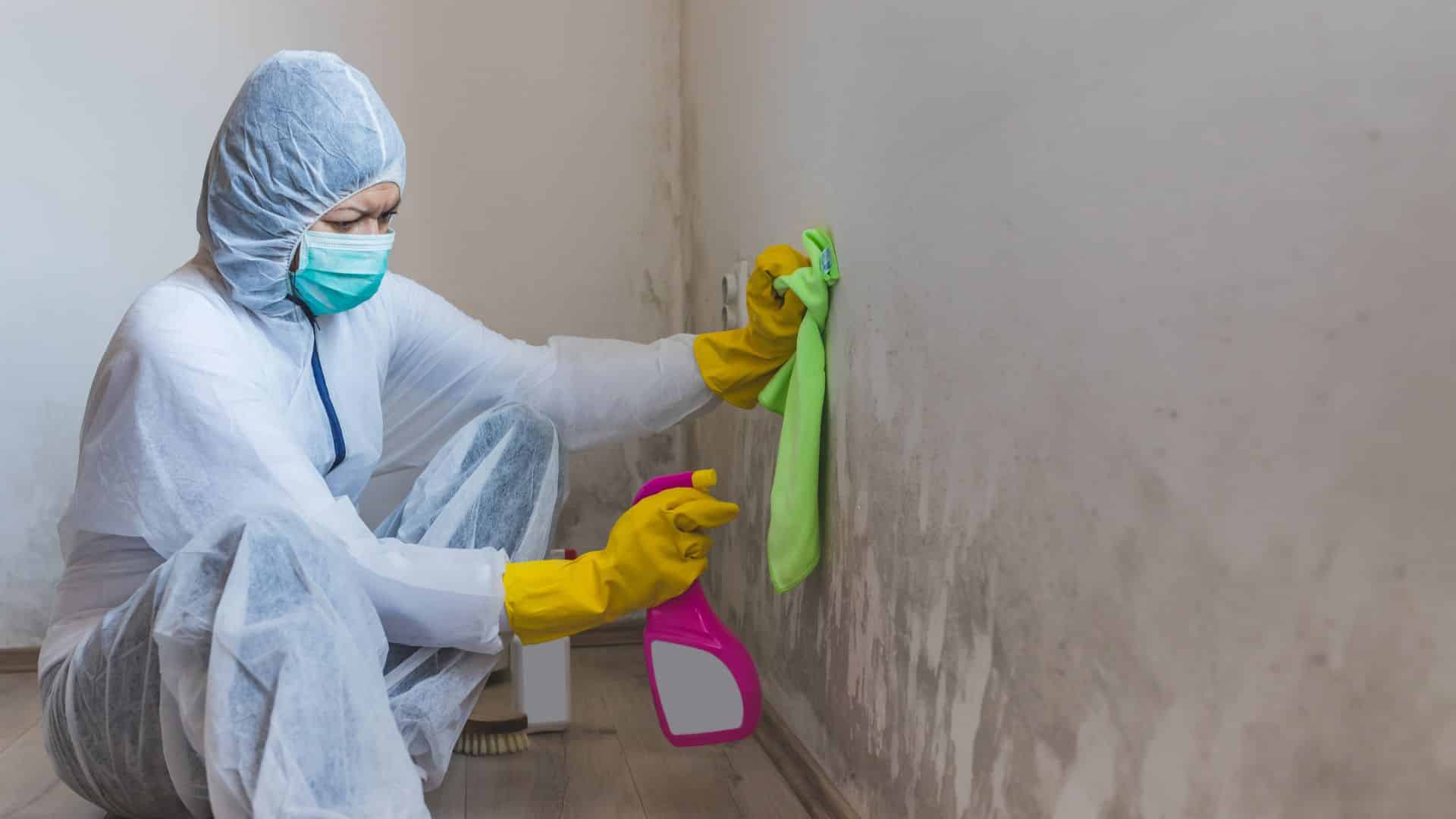
Protection matters when cleaning mold. During the process, mold spores become airborne, and you’ll breathe them unless you wear proper gear.
Essential protective equipment:
N95 respirator mask (regular dust masks don’t filter spores effectively)
Rubber gloves that extend to your forearms
Goggles without ventilation holes to protect eyes from spores and cleaning solutions
Old clothes you can discard if contaminated
Open windows and doors to ventilate the area. Turn off your HVAC system so spores don’t spread through ducts to other rooms. If you’re cleaning more than a small patch, seal off the work area with plastic sheeting. Keep children and pets away during the entire process.
Step-by-Step Guide to Cleaning Small Mold Areas
Small patches (less than 10 square feet) are manageable DIY projects. Anything larger requires professional mold remediation.
Start by identifying the moisture source. Fix leaky pipes, repair roof damage, or improve ventilation before you clean. Without stopping the water problem, the fungus returns.
Follow these steps for effective mold clean-up:
Put on protective gear (N95 mask, gloves, goggles, old clothes)
Set up fans to blow air out the windows for ventilation
Cover nearby furniture and flooring with plastic sheeting
Choose your cleaning solution based on surface type
Spray the affected area thoroughly and let it sit 10 minutes minimum
Scrub with a stiff brush, working in small sections
Rinse with clean water and dry completely with towels or fans
Bag all cleaning materials in sealed plastic bags and discard immediately
Wash your clothes in hot water separately from other laundry
Let the solution sit before scrubbing. This waiting period allows penetration to kill roots, making the job easier and more thorough.
Clean Mold from Common Problem Areas
Non-Porous Surfaces
Tile, glass, metal, and sealed countertops are the easiest to clean. Spray your chosen cleaner, let it sit, scrub, rinse, and dry. The contamination comes off completely.
Wood and Timber
Into the wood grain, mold grows, making removal tricky. Mix dish soap with water and scrub lightly with a soft brush. Avoid soaking the material. For stubborn growth, sand the surface after cleaning to remove stained fibers. Seal the wood afterward.
Drywall and Ceiling Tiles
Porous and absorbent, drywall lets contamination penetrate deep into its structure. Surface cleaning often fails. If penetration runs deeper than the surface layer, you must cut out and replace the affected section. Because most ceiling tiles are inexpensive, replacement beats cleaning.
Concrete and Brick
Porous but durable, these materials withstand aggressive cleaning. Scrub with a wire brush and cleaning solution. Taking longer to dry, concrete needs fans running on the area for several days.
Fabric and Upholstery
In their fibers, fabric, and upholstery harbor spores. Washable fabrics go in the washing machine with hot water and detergent. For non-washable items like couches or mattresses, replacement is safer than cleaning.
Tackling Problem Areas in Your Home
Bathroom Mold Cleaning Tips
Around showers, tubs, and sinks, bathrooms develop the most growth. Humidity stays high, and soap scum provides food for colonies. Clean grout with a baking soda paste. Scrub tile with bleach solution. If contamination grows underneath caulk, replace it. Run exhaust fans during showers and for 30 minutes afterward.
Basement Remediation
Damp and dark, basements create perfect conditions. Check for water seepage through walls or floors. Clean concrete walls with borax solution. Remove moldy cardboard boxes and papers. To keep humidity below 50%, use a dehumidifier.
Attic Prevention and Cleanup
From roof leaks and poor ventilation, attics get contaminated. Inspect your roof regularly. With ridge vents or gable vents, improve air circulation. Clean moldy wood beams with a vinegar solution.
Kitchen Trouble Spots
Under sinks, around refrigerators, and on window sills, kitchens develop problems. Fix plumbing leaks immediately. Wipe up spills right away. Clean refrigerator drip pans monthly.
HVAC System Concerns
Throughout your home, HVAC systems spread spores if growth occurs in ducts or on coils. Change filters monthly. Every few years, have ducts professionally cleaned. Clean visible contamination on vents with a vinegar solution.
What Not to Do When Cleaning Mold
These errors make problems worse:
Never mix bleach with ammonia or vinegar. Toxic fumes that damage your lungs come from this combination.
Don’t paint over contamination. Painting traps moisture and allows continued growth underneath.
Don’t use fans to blow air directly on affected areas before cleaning. Throughout your house, fans spread spores.
Don’t ignore large infestations. When cleaning more than 10 square feet, you release dangerous amounts of spores.
Don’t tackle the job if you have respiratory problems, allergies, or a weakened immune system.
Ventilate by pulling air out of the room, not by circulating air within it. Use one cleaning product at a time for safety.
Preventing Mold Growth After Cleanup
Control humidity levels between 30% and 50%. Buy a hygrometer to measure indoor moisture. In damp areas like basements and bathrooms, run dehumidifiers.
Prevention strategies to control mold:
Fix water problems immediately (small leaks become big problems within days)
Improve air circulation by opening windows when the weather permits
Run exhaust fans in bathrooms and kitchens during and after use
Move furniture away from walls to allow air flow behind pieces
Clean and dry wet areas within 24 hours
Use mold-resistant products when renovating (drywall, paint, caulk with antimicrobial ingredients)
Direct water away from your foundation with properly positioned gutters and downspouts
Grade the soil to slope away from the foundation
Inspect pipes, roofs, and windows regularly for leaks
Time to establish colonies is what this fungus needs. Fast drying prevents growth from starting.
Call Professional Mold Remediation Services
For small, contained areas, DIY approaches work. In several situations, professional mold remediation becomes necessary.
Call professionals when you face these scenarios:
Growth covers more than 10 square feet. According to guidelines from Angi, areas larger than 10 square feet require professional assessment because of health risks and technical expertise needed for proper mold removal.
After multiple cleanings, contamination returns, signaling a hidden moisture problem you haven’t found.
Growth appears in your HVAC system, where spores spread throughout your home through ductwork.
You discover the problem after flooding, when bacteria and contaminants grow alongside fungal colonies.
You smell it but can’t find the source (professionals have tools to detect hidden infestations behind walls, under floors, and above ceilings).
You have health conditions affected by exposure.
Your property is a rental or commercial space where building codes and liability require professional documentation.
To locate moisture sources, experts use moisture meters and thermal imaging. Professional equipment and training make removal more thorough and safer.
Final Thoughts on Mold Management
To small problems, these mold cleaning tips help you respond quickly. By addressing contamination as soon as you spot it, you save money and protect your home’s value. Remember that finding and fixing moisture sources is required for successful treatment.
Know your limits. Good DIY projects include small patches on hard surfaces. Professional help is needed for large areas, hidden infestations, recurring problems, and contamination on porous materials. To assess your situation and recommend the right approach, Royal Restoration provides FREE inspections. When you find the problem, take action, use proper methods, and don’t hesitate to call professionals when needed.